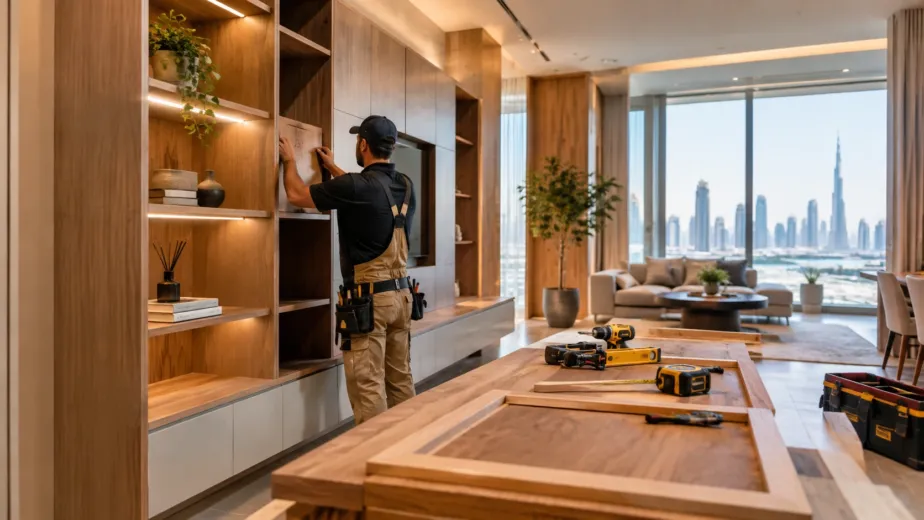
A landlord decides to refresh a two bedroom apartment before the next tenant moves in. The contractor opens a bathroom wall and finds old pipework that needs replacing. The building management office then asks for details that nobody prepared, and the schedule slips by weeks. The budget follows.
This situation is common, and it is rarely about bad luck. Most renovation problems begin with weak planning. Whether you own an apartment, a villa, a townhouse or a commercial unit, a clear plan protects your money, your time and the value of your property. Here is how to approach property renovation in Dubai in a practical order.
1. Define Your Renovation Goals
Start with the reason for the renovation, because it shapes every later decision.
- Homeowners usually focus on comfort, storage, layout and style that suits daily life.
- Landlords tend to prioritise durable finishes, easy maintenance and a presentation that helps attract tenants.
- Investors often weigh each upgrade against resale value or rental return.
- Commercial property owners need layouts that support business operations, customer flow and brand image.
Write your goals down and rank them. If your priority is rental income, an expensive designer feature may not earn its cost back. If you plan to stay for years, quality and personal taste deserve more weight.
2. Assess Your Property’s Current Condition
Repair before you decorate. Fresh paint and new flooring will not hide a leaking pipe or an ageing electrical system for long.
Ask a qualified professional to inspect the property and check these areas:
- Structural concerns such as cracks, damp patches or signs of water damage
- Plumbing, including pipework, drainage and water pressure
- Electrical systems, including the distribution board, wiring and socket capacity
- Air conditioning units, ductwork and ventilation
- Cosmetic issues such as worn flooring, tired joinery and damaged finishes
This is especially useful in older villas and apartments, where hidden problems are more likely. A proper assessment gives you an honest picture of what the project involves, and it makes quotations from contractors much easier to compare.
3. Set a Realistic Renovation Budget
Property renovation costs in Dubai depend on the size of the property, its condition, the materials you choose and the scope of work. A cosmetic refresh and a full villa renovation sit at very different ends of the spectrum, so be wary of any single price that claims to fit every project.
Build your budget in AED and include these items:
- Labour and contractor fees
- Materials and fittings
- Design and consultancy fees
- Approval and administration charges, where applicable
- Waste removal and site protection
- A contingency fund
The contingency matters more than most owners expect. A common guideline is to set aside roughly 10 to 15 percent of the total budget for surprises. As an illustration only, on a project budget of AED 200,000, that would mean holding AED 20,000 to AED 30,000 in reserve. Older properties may justify a higher allowance.
4. Understand Permits and Building Approvals in Dubai
Requirements differ depending on the type of property, its location and the work involved. A cosmetic update inside an apartment is not the same as altering a villa exterior or changing a commercial fit out.
Before work begins, find out which parties are relevant to your project. These may include:
- Your building management or owners association
- The master developer of your community
- Dubai Municipality or other relevant authorities
- Utility providers, if work affects water or electrical connections
Do not assume that every project needs the same approvals. Ask your building management for their renovation guidelines, and ask your contractor which approvals they expect for your specific scope. Community rules may also cover working hours, material delivery, lift use and waste disposal, so confirm these early.
5. Choose the Right Renovation Contractor
Choosing among Dubai renovation contractors takes more than collecting three prices. Ask each contractor to provide a written quotation that describes the work clearly, and compare them like for like.
Check the following:
- Experience: Have they handled projects similar to yours, such as villa renovation in Dubai or apartment renovation in Dubai?
- Scope of work: Does the quotation list every task, or does it leave gaps that could become extra charges?
- Materials: Are brands, grades and specifications stated?
- Timeline: Is there a clear schedule with defined stages?
- Warranty: What is covered after handover, and for how long?
The lowest quotation can become the most expensive if it leaves out work or uses materials that need early replacement. Choose the contractor who is clear, transparent and responsive. Our [Property Renovation services page] is a good place to see how a structured approach looks in practice.
6. Select Materials and Design Options
Dubai’s climate should guide your choices. Heat, humidity and constant air conditioning put real demands on finishes, so appearance should not be the only factor.
Consider these points:
- Durability: Choose flooring, paint and joinery that cope well with temperature changes and moisture.
- Maintenance: Surfaces that are easy to clean suit rental properties and busy households.
- Functionality: Think about storage, lighting, ventilation and how each space is used.
- Air conditioning: Make sure design changes do not block airflow or reduce cooling efficiency.
- Outdoor areas: Use materials that can handle strong sun and dust.
If you want help balancing style with practicality, working with an [Interior Design service] early in the process can prevent costly changes later.
7. Create a Realistic Renovation Timeline
Every project has stages, and most of them depend on one another. A typical sequence runs from approvals and site preparation to any structural or building works, then electrical and plumbing, followed by finishes, fittings and a final clean.
Plan your material procurement carefully. Imported items and custom joinery can take time to arrive, and one late delivery can hold up several trades. Order long lead items early and confirm delivery dates in writing.
Agree on site access, working hours and a single point of contact with your contractor. Avoid promising yourself or your tenants a fixed finish date until the contractor has reviewed approvals, materials and the full scope. Build in some flexibility, because delays can come from approvals, deliveries or unexpected findings behind walls.
8. Monitor Progress and Maintain Quality
Staying involved does not mean standing over the workers. It means keeping a regular rhythm of communication.
- Request progress updates at agreed intervals, with photos where possible
- Visit the site at key stages, such as before walls are closed and before finishes go on
- Put every change to the scope in writing, including the cost and time impact
- Keep copies of quotations, invoices, drawings and approvals in one place
Small issues are far easier to correct early. A misplaced socket is a quick fix before tiling and a frustrating one afterwards.
9. Complete the Final Inspection and Handover
Do not rush the end of the project. Walk through the property with your contractor and examine each room carefully.
Prepare a snag list that records anything unfinished or unsatisfactory, such as paint marks, uneven tiles, doors that do not close properly or fittings that are loose. Agree on a date for these items to be fixed.
Test every installation before you accept the work. Run taps and showers, check drainage, switch on lights and sockets, and operate the air conditioning. Finally, collect warranty documents, product information and maintenance guidance, and store them safely for future reference.
Property Renovation Planning Checklist
Use this renovation planning checklist before you begin:
- Write down your main goal and priorities
- Arrange a professional inspection of the property
- Set a budget in AED with a contingency reserve
- Confirm requirements with building management, the master developer and relevant authorities
- Collect written quotations from several contractors
- Compare scope, materials, timelines and warranties
- Choose materials that suit Dubai’s climate
- Order long lead items early
- Agree on a schedule, site access and communication method
- Record all changes to the scope in writing
- Complete a snag list and test all installations
- Keep warranties and maintenance documents
Plan Your Property Renovation with Smart Edge Group
Smart Edge Group is a property renovation and construction service provider serving homeowners, investors, landlords and commercial property owners in Dubai. If you are weighing up a project, our team can help you think through scope, materials and next steps before work begins. You can also learn more about our Construction Services if your plans go beyond renovation.
If you are ready to talk about your property, please Contact Us to discuss your renovation requirements.